


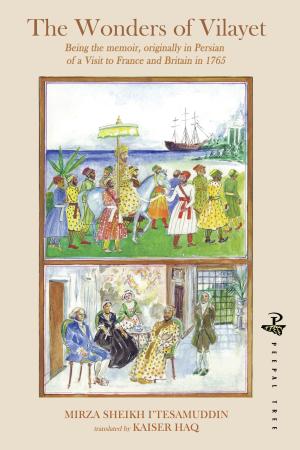
Written in Persian, 'Shigurf Nama-e-Vilayet' or 'Wonderful Tales about Europe' is an entertaining, unique and culturally valuable document. The Mirza was in no sense a colonial subject, and whilst he wrote frankly about what he felt accounted for India's decline and Europe's contemporary ascendance, he was a highly educated, culturally self-confident observer with a sharp and quizzical curiosity about the alien cultures he encountered. His accounts of visits to the theatre, the circus, freakshows, the 'mardrassah of Oxford', Scotland, of the racial alarms his presence sometimes provoked and of his impressions of British moral codes (including the 'filthy habits of the firinghees') make for fascinating reading.
There is, too, embedded in the narrative, a touching and cautionary account of the Mirza's relationship with Captain Swinton, with whom he travelled from India and who was his regular companion in Britain. Swinton was evidently kindly and generous, but by the end of the Mirza's stay, the friendship has broken down, chiefly over Swinton's refusal to take the Mirza's Islamic faith and cultural identity seriously.
Kaiser Haq's scholarly, modern translation is the first to appear in English since the original 'abridged and flawed translation' which appeared in 1827. The Wonders of Vilayet is an important document, a salutary addition to Western accounts of the 'Otherness' of India, orientalism in reverse.


