


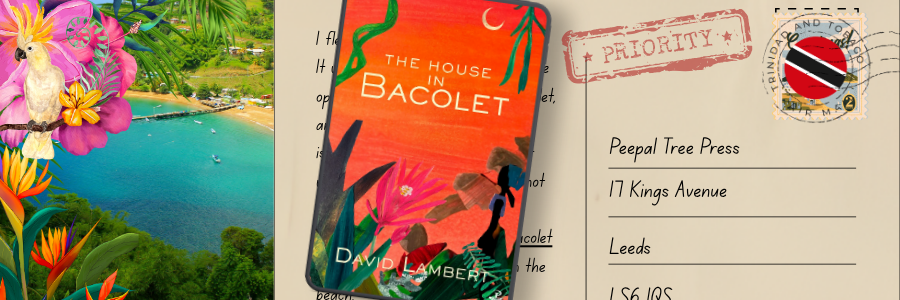
David Lambert
I flew to Tobago mid-January 2026. It was 27 years (!) since I wrote the opening lines of The House in Bacolet, and 16 since I’d been back to the island of my birth. Far too long. It was to be a joyous homecoming, not least as I’d arranged the novel’s Tobago launch in the big new Bacolet Beach Club Hotel right there on the beach.
As the plane touched down, I wondered how much the island would have changed. Tobago is a laid-back island, sleepy even, where nothing moves fast. Boy was I in for a surprise!
It began on landing. A hulking new airport terminal filled my plane window and went on and on… and on, like a big, dark wave of plate glass, local coral and corrugated curves. Our taxi driver was later to tell us that it’s the biggest airport in the Caribbean, far outstripping in size busy tourist hub Barbados, and designed to welcome a crazy 3 million travellers per year! Only thing is, the ribbon-cutting, media shots and junketing all happened last year but the gigantic new ANR Robinson Airport is, is still (as I write May 2026), not operational...
Our BA flight rolled to its accustomed halt outside the squat, old two-storey old terminal we knew well. Gone is waving gallery in the novel, where Julia sees Hugh off.
You spend thousands of hours on a novel’s opening three pages—believe me! Besides establishing setting, you have to draw your reader in, intrigue them, introduce characters and incident, and get reader expectations going, while foreshadowing the main themes of the fictional world your reader is going to spend maybe 15 or 20 hours in.
My setting is the arrivals concourse of Tobago's airport. It’s here that my characters Hugh and Julia emerge from Customs pushing their piled luggage trolley into their new life.
When I started the novel in 1998, the lottery office was ‘sagging’ as I describe it, and the taxi rank (now disappeared was a line of quite used Japanese Mazdas. Now passengers phone pre-booked hybrid Ubers and Bolts.
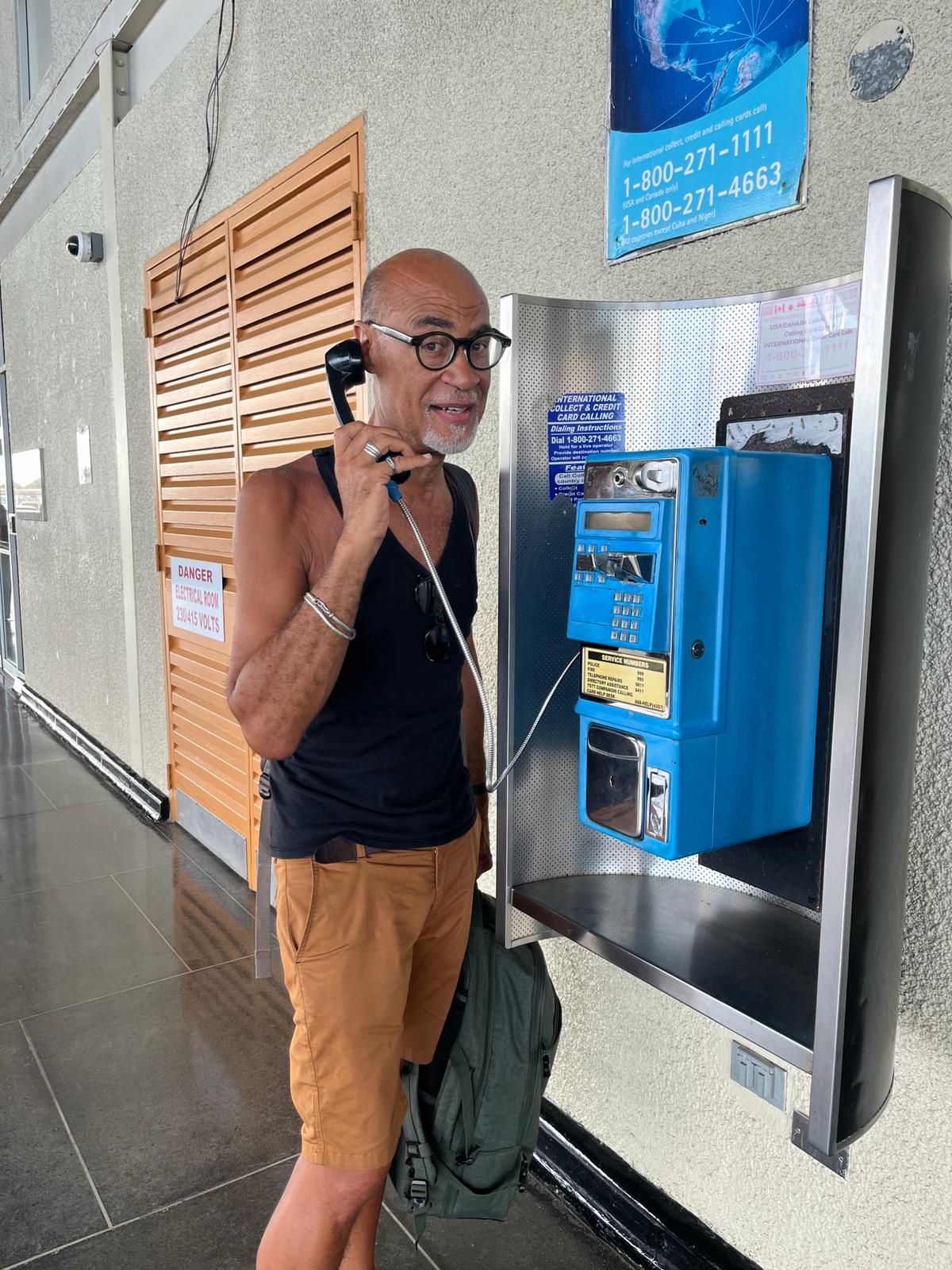
I’d decided to update the novel from 1998 when it was conceived, to the present. So from my desk in England, I was faced with the task of imagining Tobago as it might be. Luckily for me, the hulking new airport remained mothballed. I was pleasantly surprised to see what must be Tobago’s last wall-mounted pay-phone still there on the wall besides the exit from customs where Hugh uses it!

The update meant giving each character their mobile phone... But for the plot to work, and to keep one character ignorant of what another was up to, I had to resort to poor connectivity, hurricane damage and no internet.
First impressions are powerful, even if they are re-impressions of somewhere (or someone) you know intimately but have been absent from for a long period. I was overwhelmed by the same things Hugh and Julia were (and I’m a Trinbagonian!).

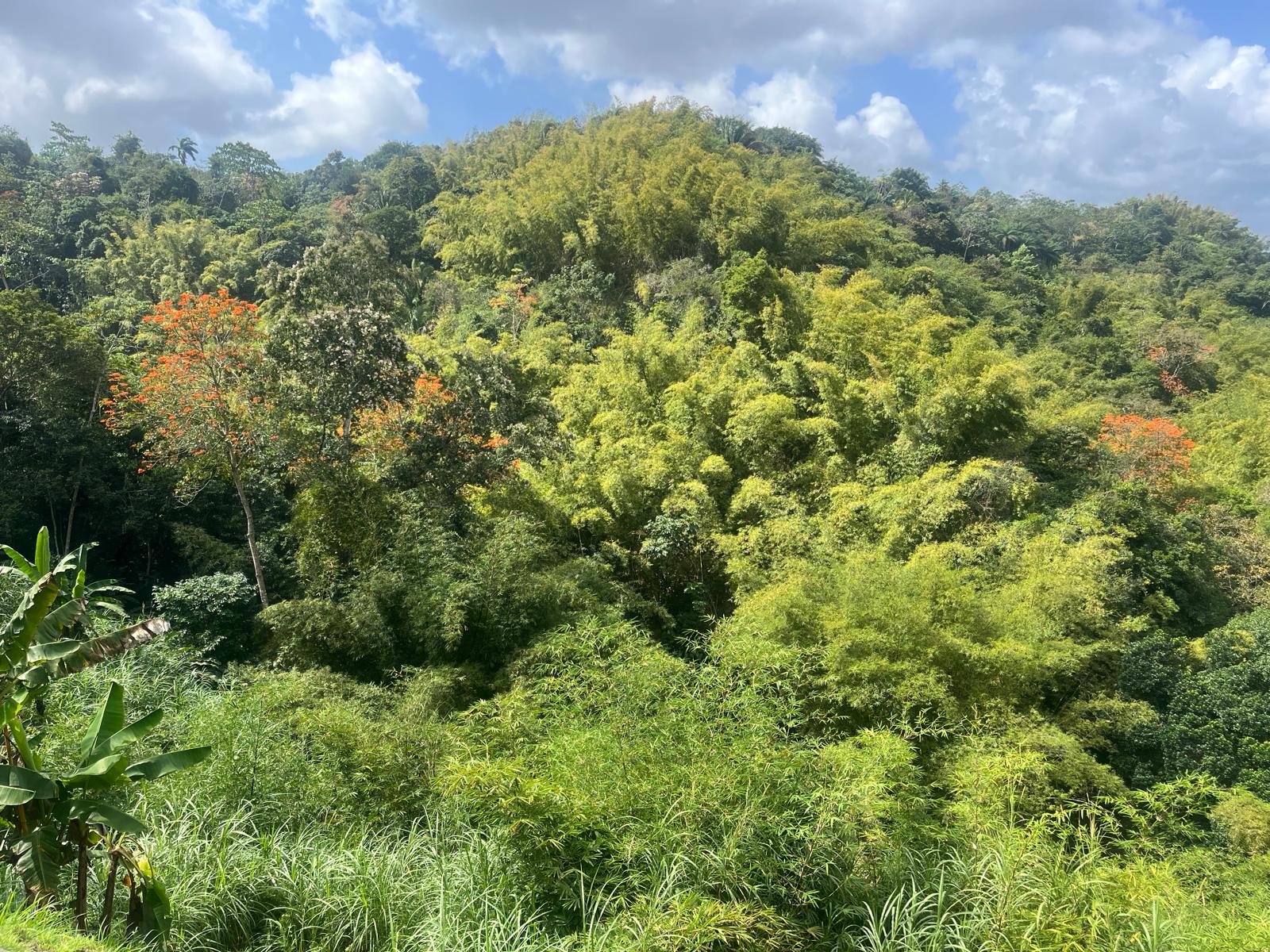
I kept exclaiming, Wow! This tumbledown shack seems held up only by the profusion of bright green vines that have invaded it.
And the people! So dignified in their movements. No one rushes around or breaks sweat. Despite the heat, people’s clothes somehow remain pressed and ironed. When Tobagonians speak (a policeman, a market woman explaining when best to plant), it’s with a kind of measured, old-world courtesy that’s seductive.
Probably what most delights me about returning to Tobago is the lilt and sound of people’s speech. It was a challenge to render on the page the distinct, rich Creole that Tobagonians speak. I tried my best to capture it in Horatio especially, so my readers might start to hear the melody and rhythm of it. It’s there too in cheerful talk of stall-keeper Grace, sitting in her doomed shack balanced above a precipice.
I myself spoke with the same sing-song as a child and I found it creeping back into my speech. Like remembering the strains of an old song...
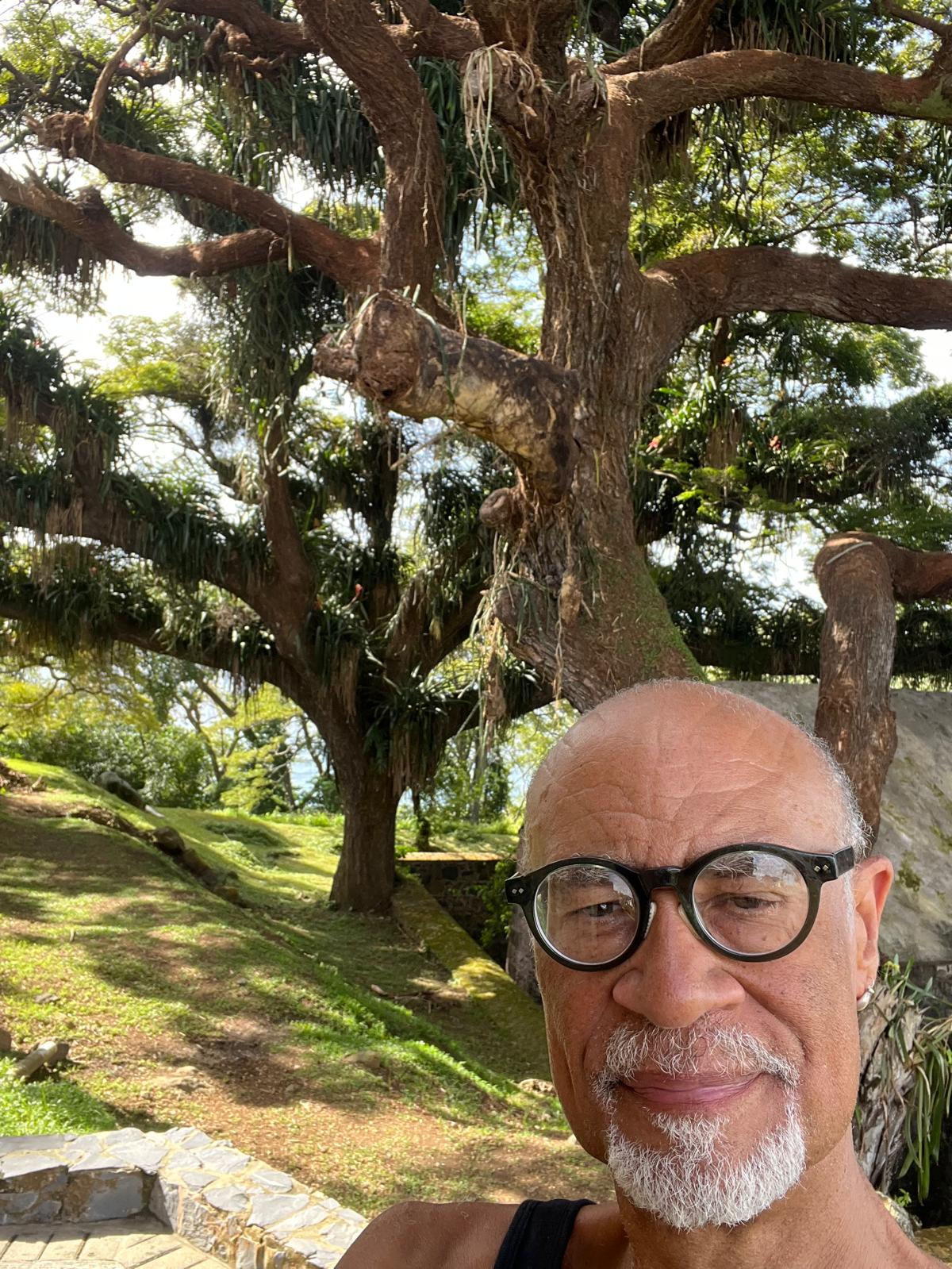
Still, to the locals, I stand out as the newbie. I catch them looking to see what it is I’m photographing. They’ve seen it all before. And after a few weeks on the island, I too am noticing tourists oohing and ahhing at a double hibiscus bloom, the huge growths of parasitic plants in the branches of a vast 200 year old samaan tree.
The noise and chaos of a sudden downpour blotting out the blue sky.
Of course, you’re bowled over by the intensity of colour in the Caribbean. Especially if you’ve just flown in from grey January in the UK!
But so often in the West Indies I also experienced the more subtle, the nuanced. It's this side I wanted to bring out in The House in Bacolet. The unlikely expounder of this view is Horatio in his conversations with artist Julia. ‘We not just primary school colours you people from away imagine us to be...we more than that...we have subtle too.’
I wanted to present another side of the Caribbean aesthetic. Less of the vibrant, carnival intensity we’ve all come to associate with this part of the world—its art, its music, its people, and I daresay, its literature. It is true, the bracts of the balisee are astounding in their redness. The breast of the hummingbird is a glittering blur of sapphire. People’s rich complexions and faces and physiques are arresting. These are not Van Gogh’s Potato Eaters, nor Renoir’s bourgeois picknickers at Bourgival!
This vividness, this intensity—the adjective ‘vibrant’ seems inevitable in any description of the Caribbean or its people—is what makes my character Julia so keen to get her easel and paints out. While fearful she cannot do it justice.
I guess any part of the world can be reduced to a set of assumptions and commonplaces in the popular imagination. That goes for its people too. The reserved English. The loud Yank. Whatever. I think it’s the job of fiction to challenge those lazy assumptions, expose them for what they are, buck the trend and give us more complex, contradictory characters!
A visit to German sculptor Luise Kimme’s Gallery in Mount Irvine shows how the beauty and movement of the people can be captured in wood.
The gallery of the late sculptor, who lived over 35 years in Tobago, is full of carved statues of characters from West Indian folk tales. Papa des Bois. The Soucouyant vampire. The Blue Boy. A Christlike rudeboy hovering on a cross. You’d think Luise had carved them all in local woods, cedar or immortelle. ‘Uh uh. It has to be the hardest cured English Oak,’ she pretty much scolded me. She used to have it shipped down at great expense from London. I find there’s an irony there; the movement of essential West Indian personages rendered in the solid wood of the most English of trees, by a Dusseldorf sculptor.
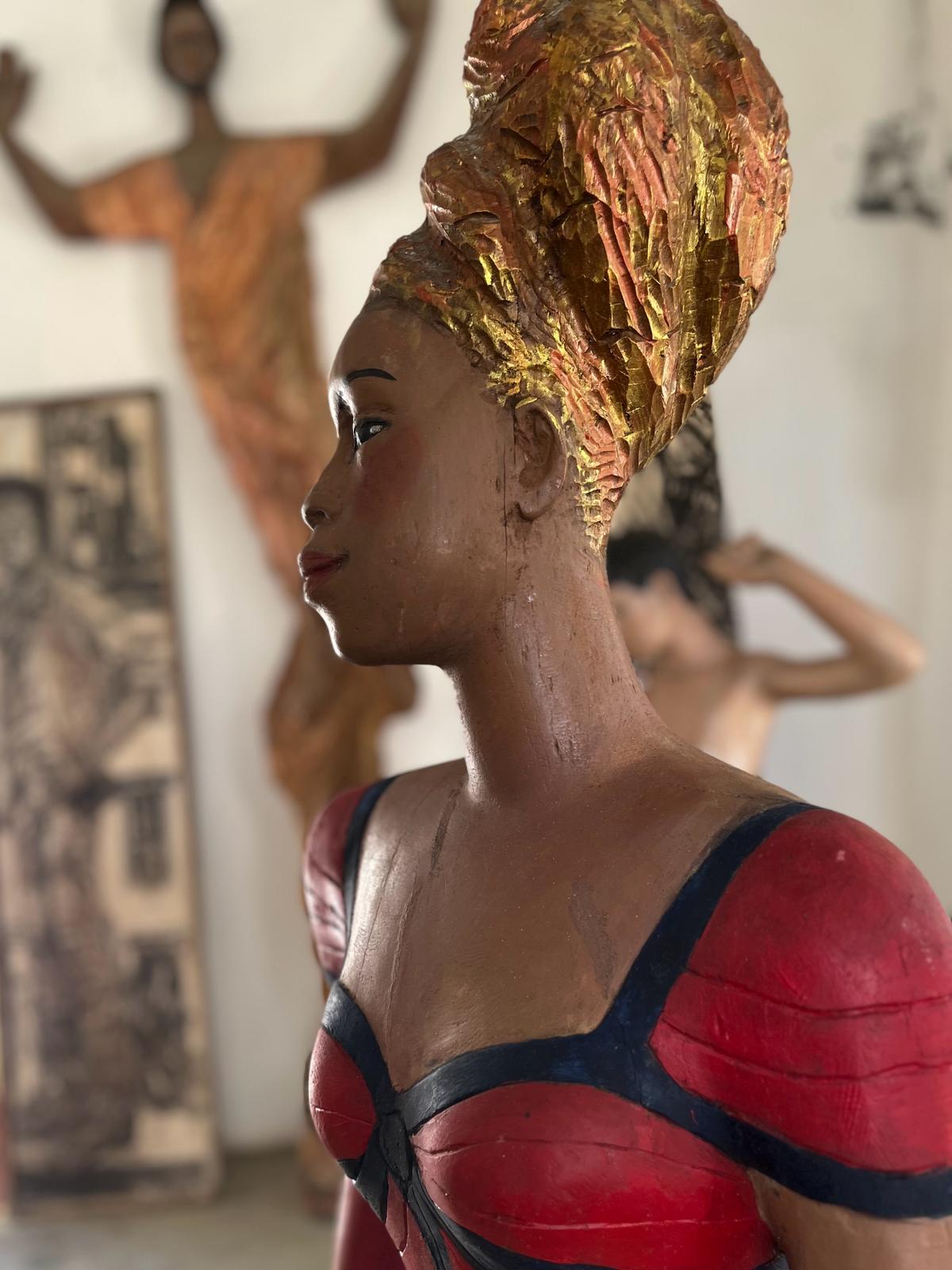
Of course it was Luise Kimme who seeded the idea for The House in Bacolet. She mentioned in passing a European couple who had arrived to live on the island. When their estate agent failed to show at the airport, they stepped into the large licensed American car of a charismatic local called Elvis. And he ‘totally got into their lives’.
I had the oddest experience when back, of actually arranging a meeting with Elvis! In the 27 years I had been living with him (as it were) I’d lent him various traits (a ‘hyena’s shriek’ of a laugh being one). The man who came to meet me in the hotel lobby for a drink was very different from my Horatio, but he drove a taxi van. And weirdly, he had a piercing shriek of a laugh...
I’d always thought Luise had said that Elvis had a big American car. But the real taxi driver knew nothing about such a vehicle. I guess I must have made the car up. Elvis / Horatio had picked up hundreds of airport tourist fares over the years. He was eager to tell me how he had ferried the likes of Diana Ross, Quincy Jones and Morgan Freeman round the island… It was exactly the sort of thing Horatio would come out with.
Life starts to imitate art. Next day, the taxi driver character from my novel is driving us and our luggage to the airport for the flight home... I gave him a big tip and a dedicated copy of The House in Bacolet. I imagine it right there on his dashboard, him telling his fares, ‘A fella from England wrote a novel ‘bout me, yeah man!’
Post-publication, my trip back to Tobago was richer, more nuanced, more layered. My mind was constantly comparing my descriptions in the novel with the reality so many years later. A grove of feathery coconut trees.
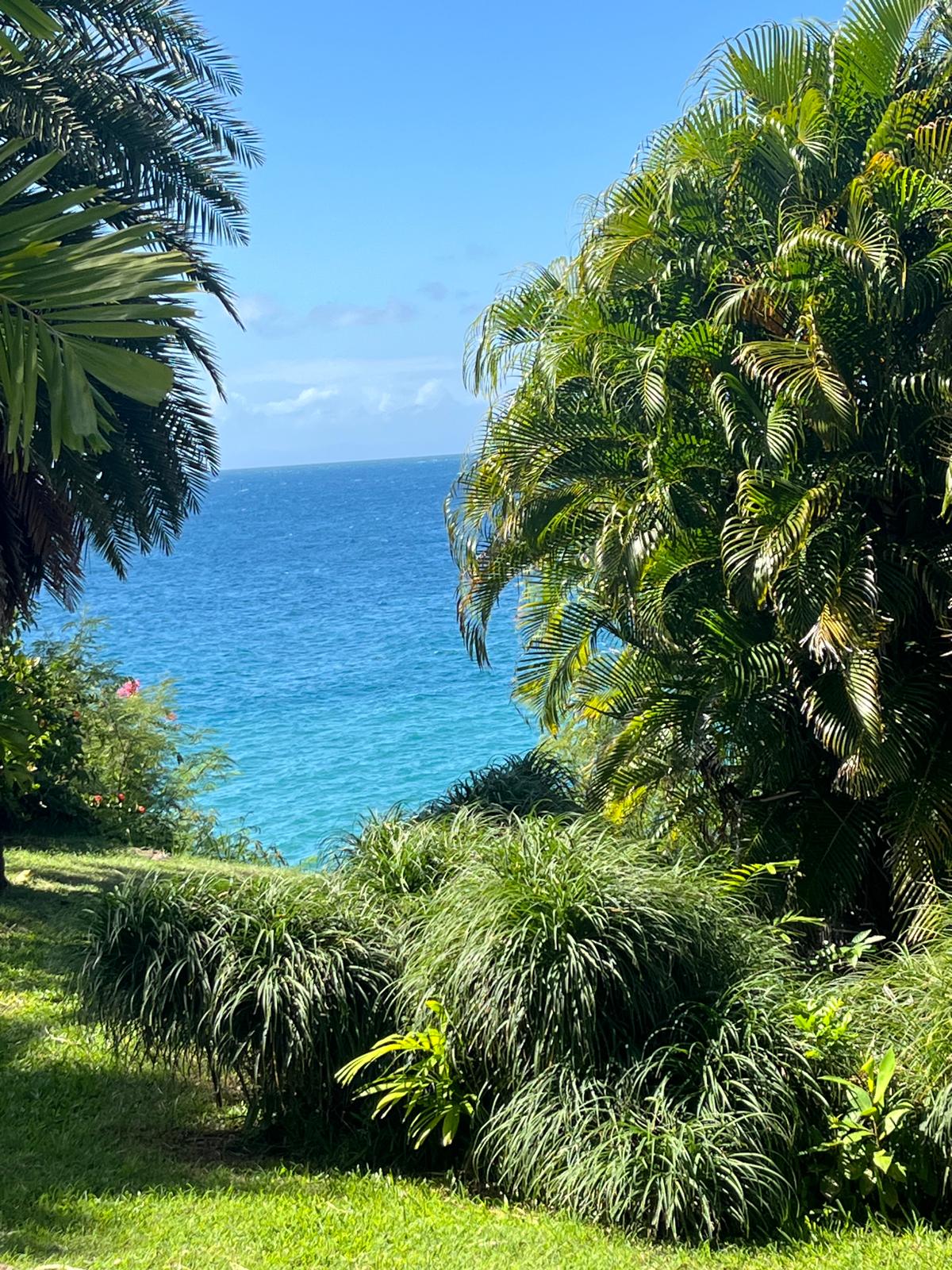
The spumes of white froth shooting up from the waves breaking on the rocks at Crown Point.
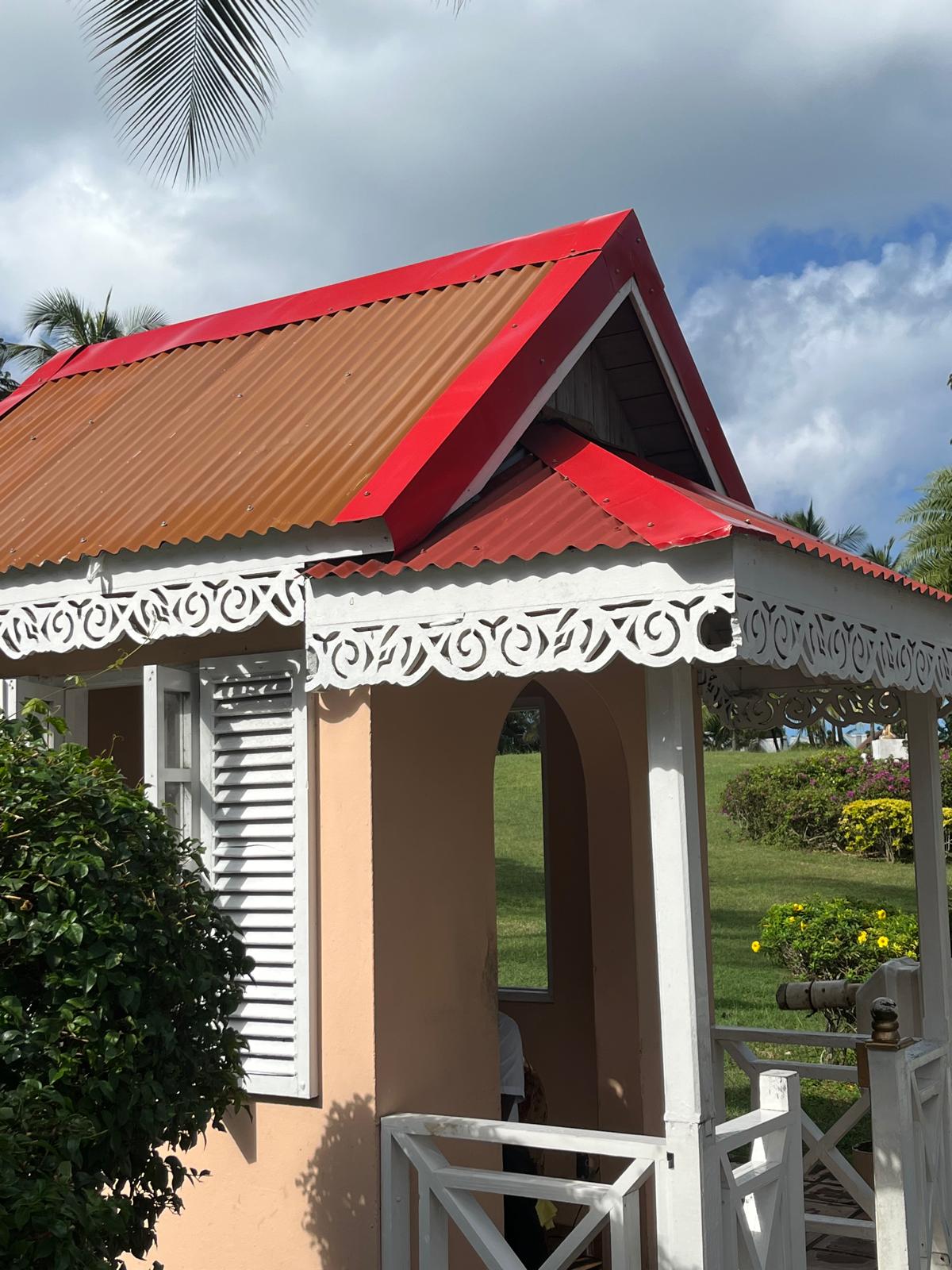
I was awed by the blue-turquoise of the sea at Pidgeon Point, the perfect crescent of Castara Bay, the colourful galvanised roofs cascading down the green hillsides to Charlotteville.
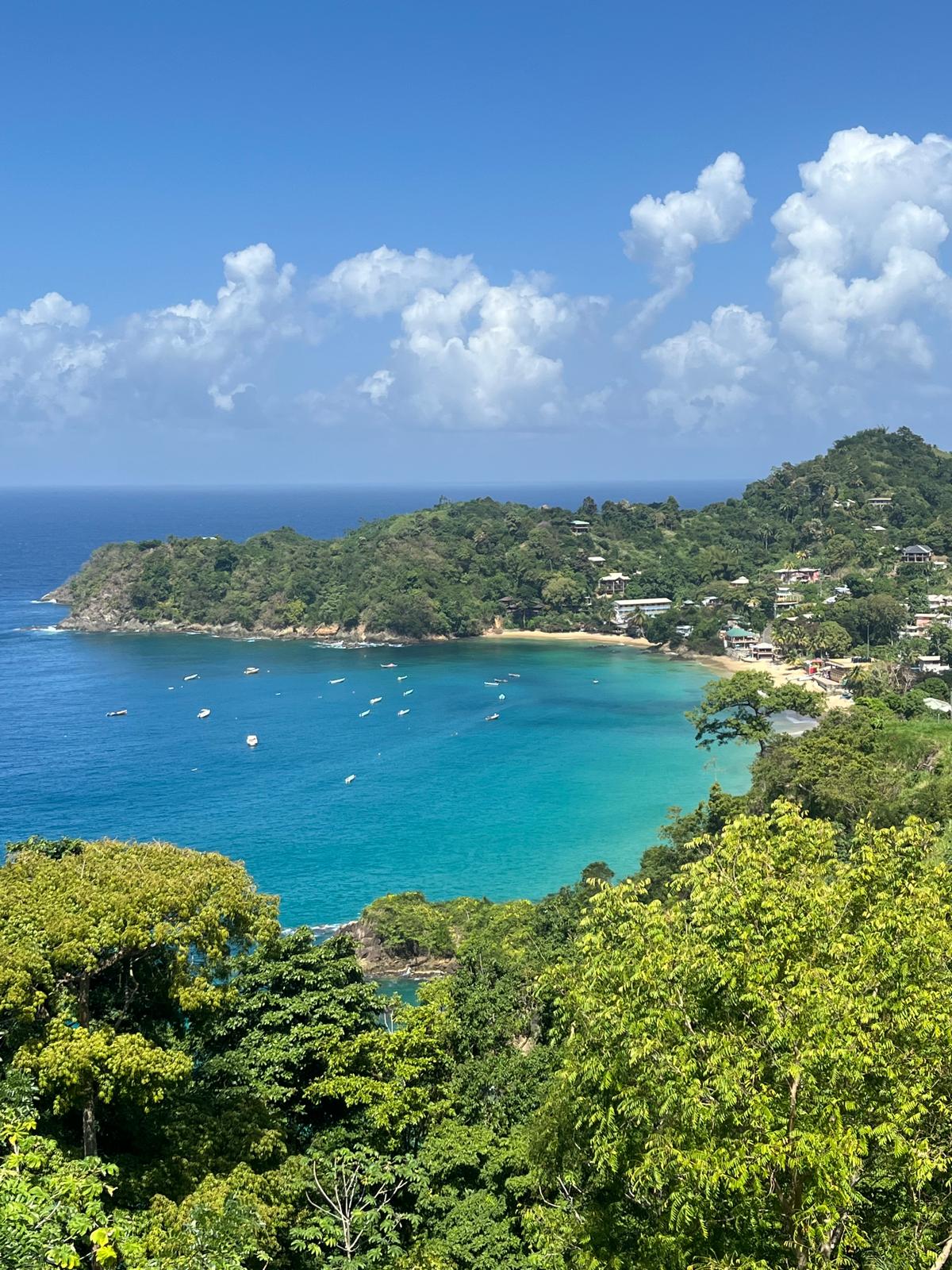
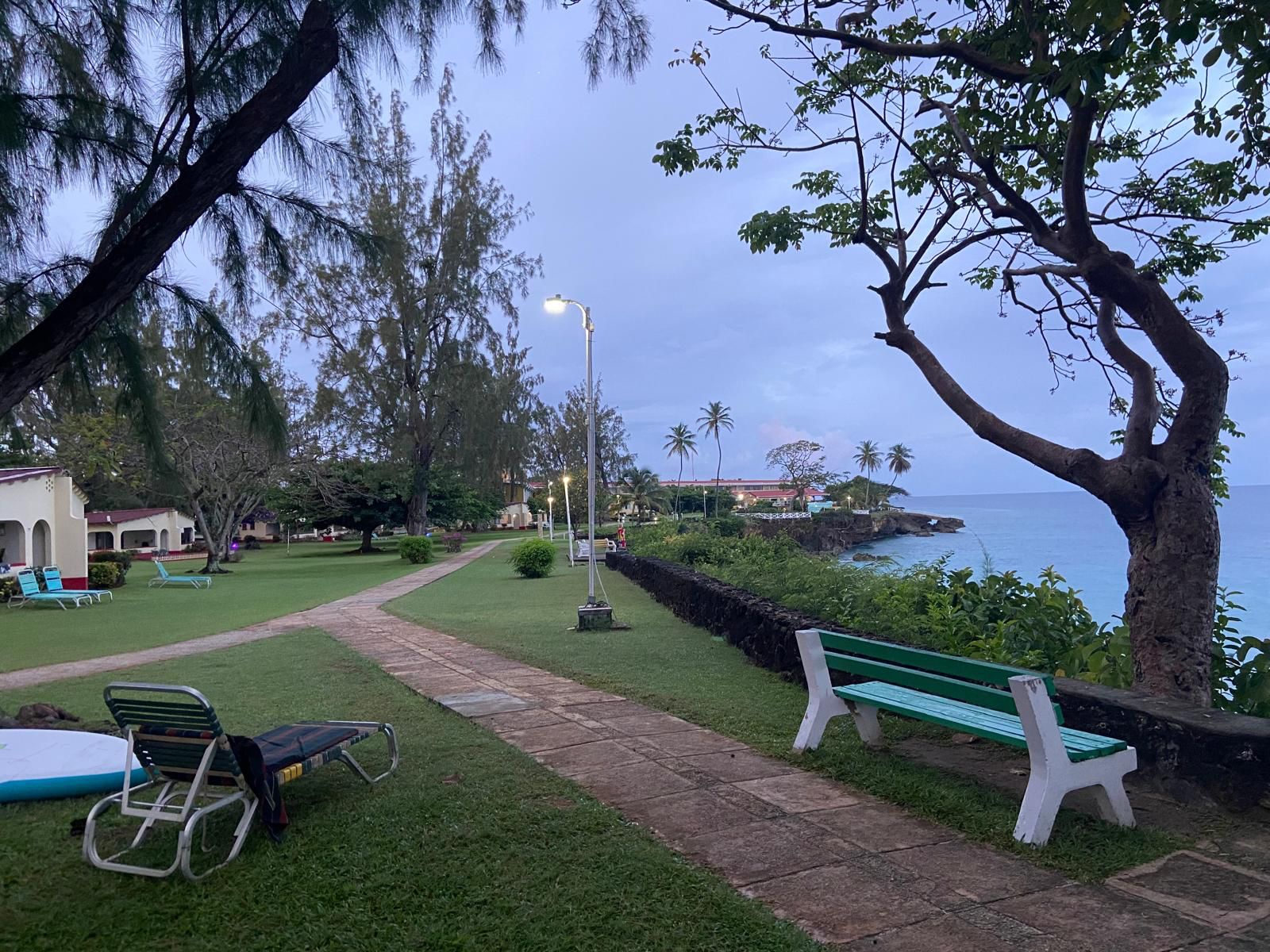
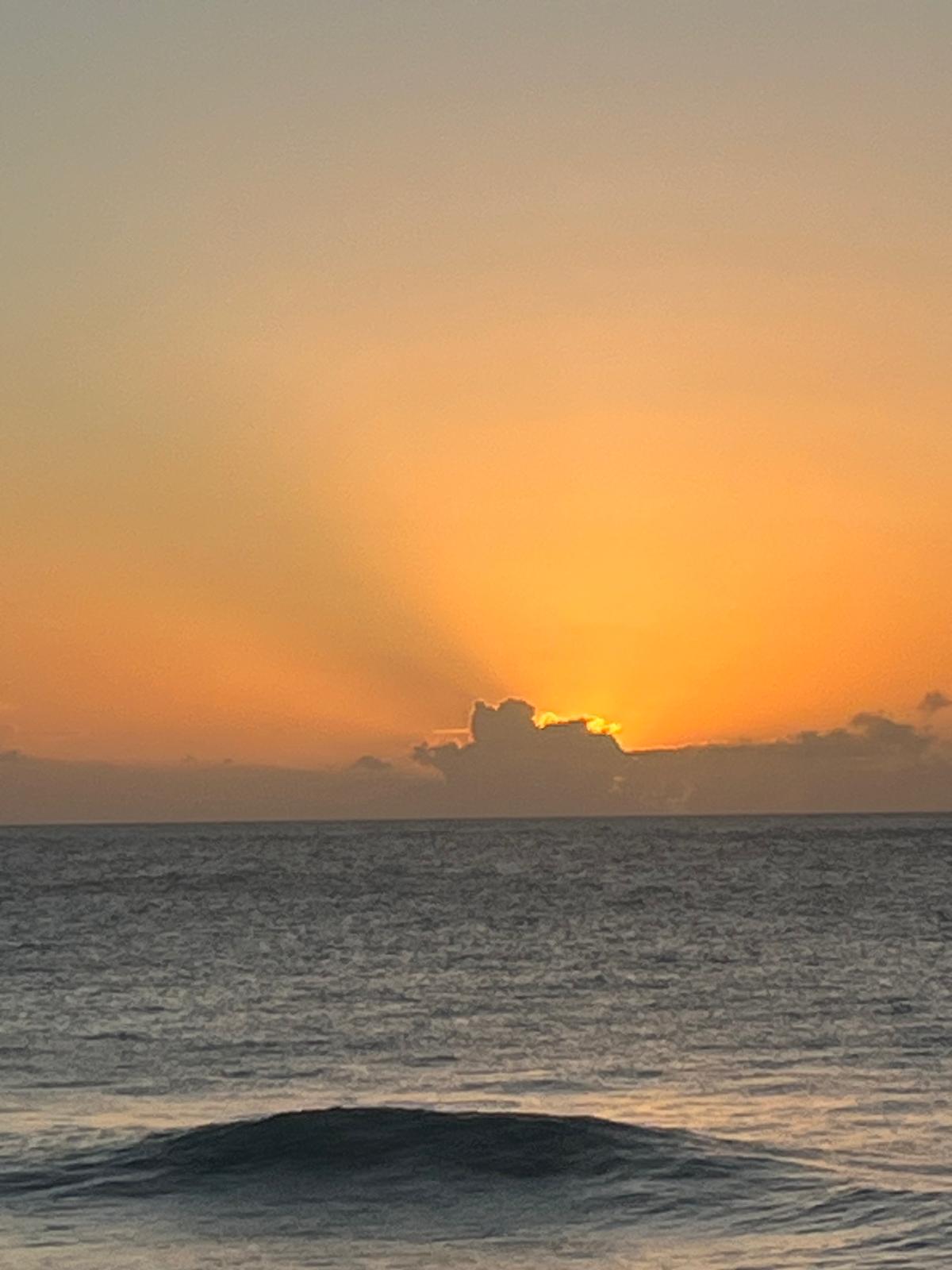
I was moved by the early dawn views over the sea at Store Bay through the plate glass windows of our room at Crown Point Beach Hotel. I found myself welling up as I’d never done before. It might just be age (I celebrated my 68th birthday while back in my birthplace). Or it might be because I finally felt sure that in The House in Bacolet I’d done justice to representing this phenomenal little island, a mere dot 24 miles long by 12 miles wide lying at the confluence of the Caribbean and Atlantic, slightly off course from the great arc of the Antillean archipelago which stretches from Cuba to Venezuela.
One of the first things Hugh and Julia Pennington recall as they return to live on the island is the curious staircase standing alone in a field, unattached to any house or building. In the novel I have transformed what is in reality a rather unprepossessing staircase, into a sweeping classical stone structure with balustrades. The entrance to a plantation house, they wonder, maybe just a European planter’s folly? The truth is rather more prosaic; these steps were the entrance to the big old wood-shingle Fairfield House which my family owned and which stood in a field beside our house in the early 60s. Each member of my family visiting from abroad, always makes a kind of pilgrimage back to ‘the steps’.
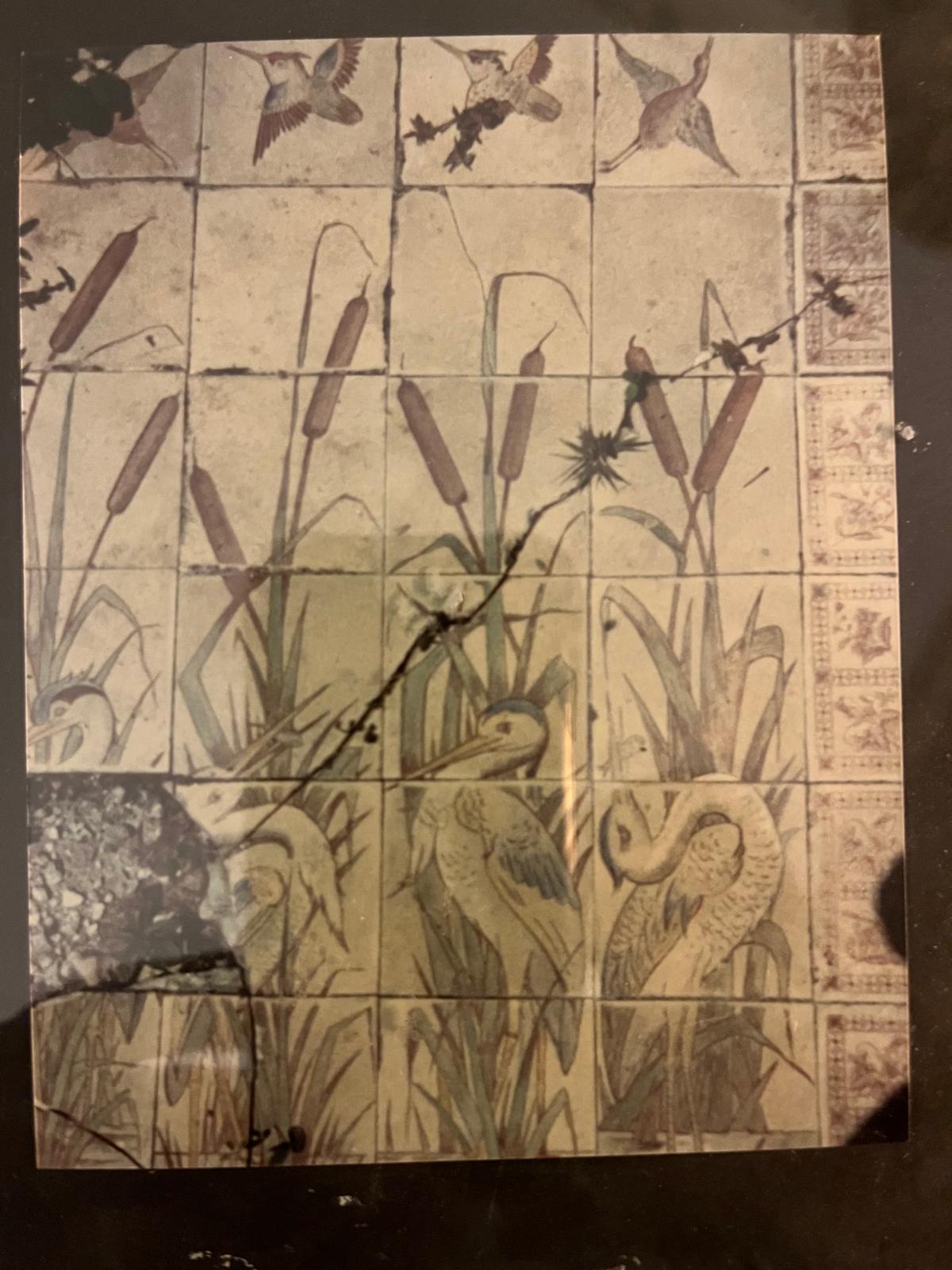
We walk to the top, we wonder what has become of the Dutch fired tiles that used to grace the top platform, we look at the blue sea view to the tiny capital Scarborough, then we walk down the other side. I don’t know what we expect to find there. The past. Our past.
When it rains in Tobago, you know about it. It’s so heavy traffic stops. But it’s the noise you remember, deafening drumming on galvanised roofs stop all conversation. You have to shout to be heard.
Hugh and Julia visit Fort St George, which stands above Scarborough, and look down to Bacolet. Here stands the old church I imagine Hugh and Julia to be converting, lost in the swathes of green bush. The Fort Museum brings to harrowing life Tobago’s history of enslavement. Like the Penningtons, you emerge shocked and sobered by man’s inhumanity to man...
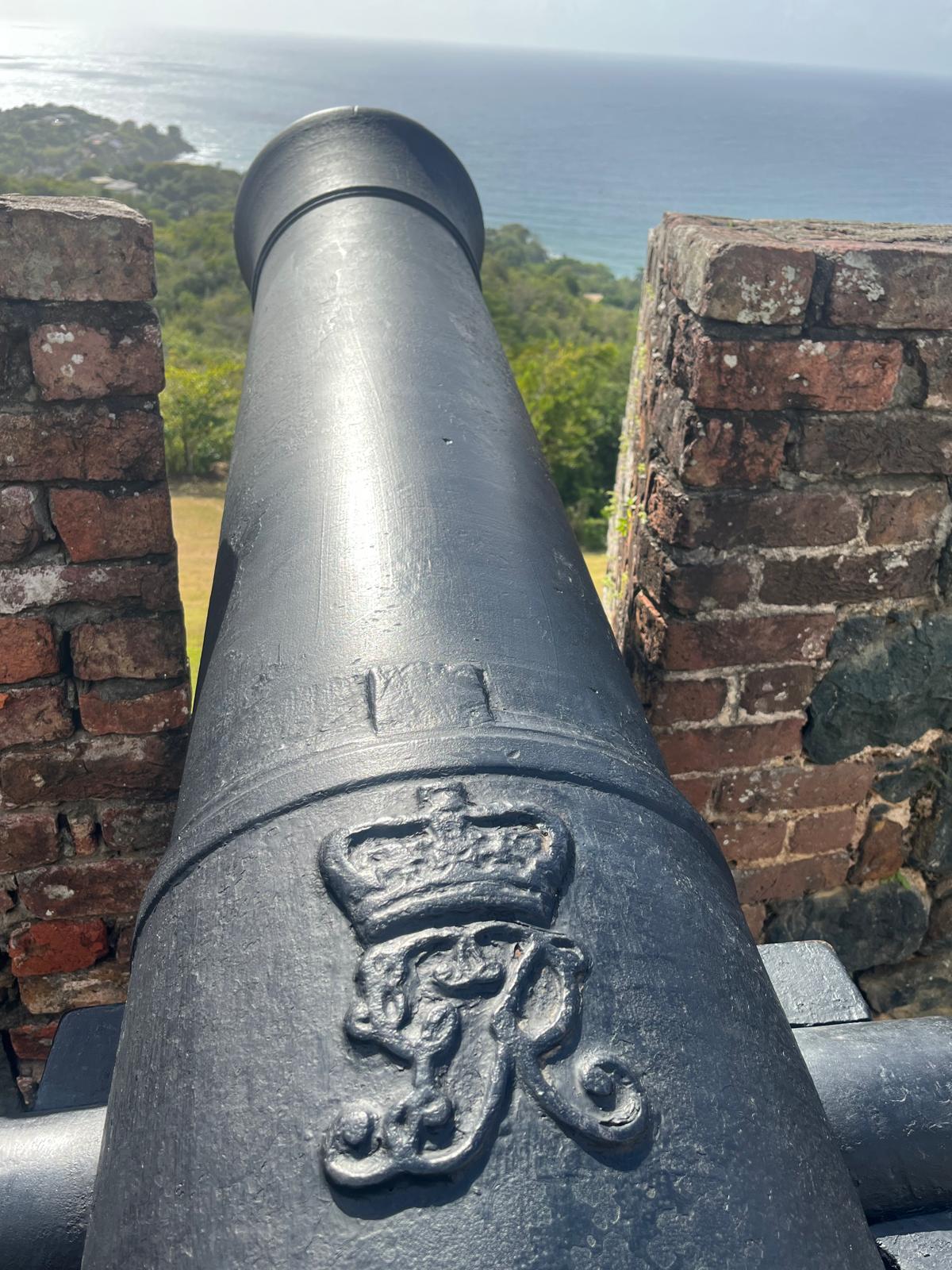
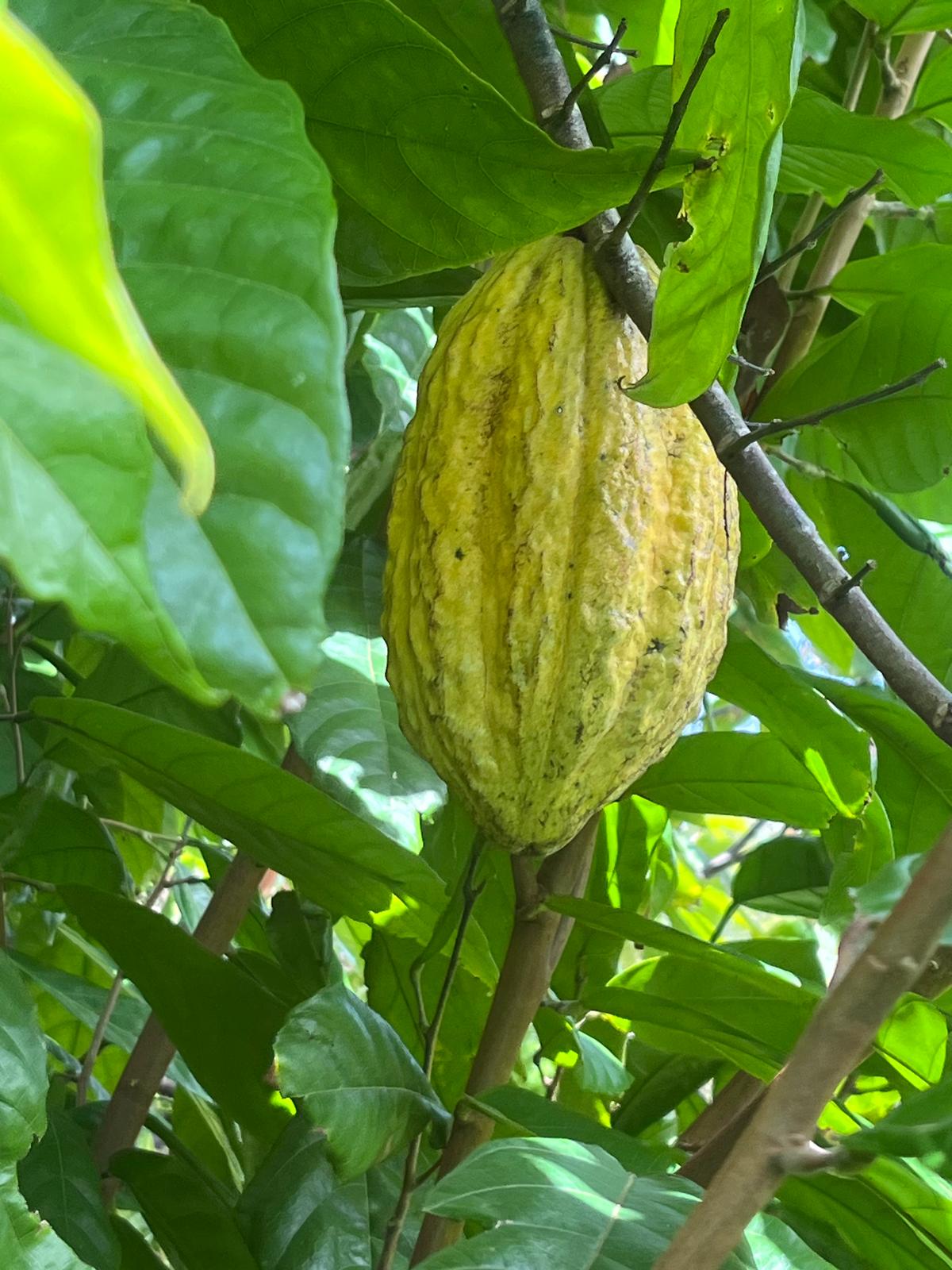
It happened 400 years ago. But you can almost feel the very texture of history as you place your palms on the sun-hot English canons, some of them captured by Nelson from Napoleon. In this insane quest for Caribbean land, this tiny island changed hands some 30 times. Even the Latvians (the Courlanders) owned it for a brief period! Whole empires waging savage wars over little Tobago for its lucrative cocoa plantations worked by slaves shipped from Africa.
But the view has changed today!
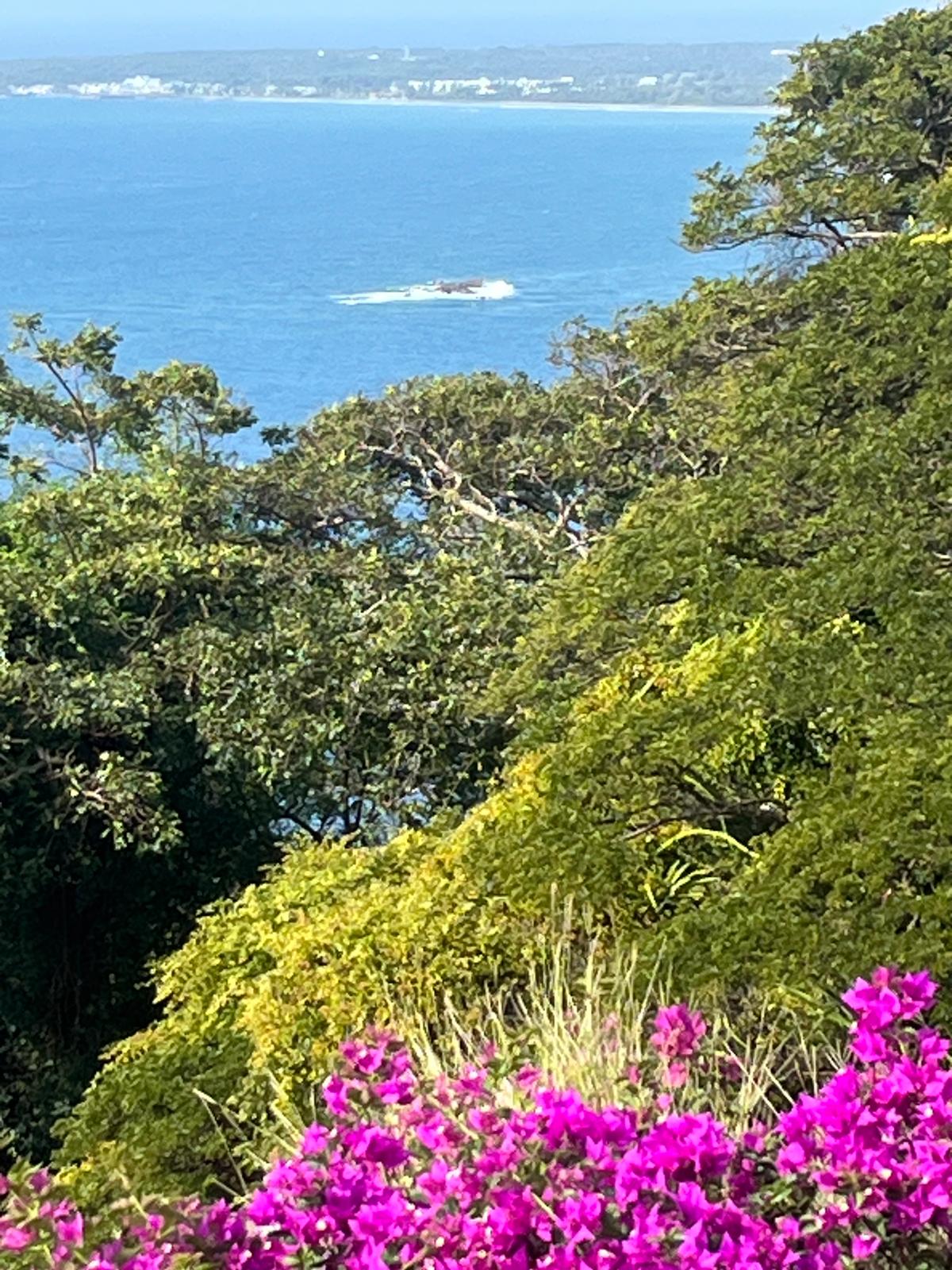
Here‘s Red Rock out in the bay. It’s where Robinson Crusoe, the hero of Daniel Defoe’s 18th century novel, ran aground. Crusoe finds the only other man on the island, a Black man. Of course, naturally, he makes him his servant. He calls him ‘Friday’ as this is the day he finds him. The Penningtons eventually acquire a yard dog (a ‘pot hong’) and call her Friday for the same reason. There’s a grim equation between the naming of a dog and the estimation of the worth of another human being...
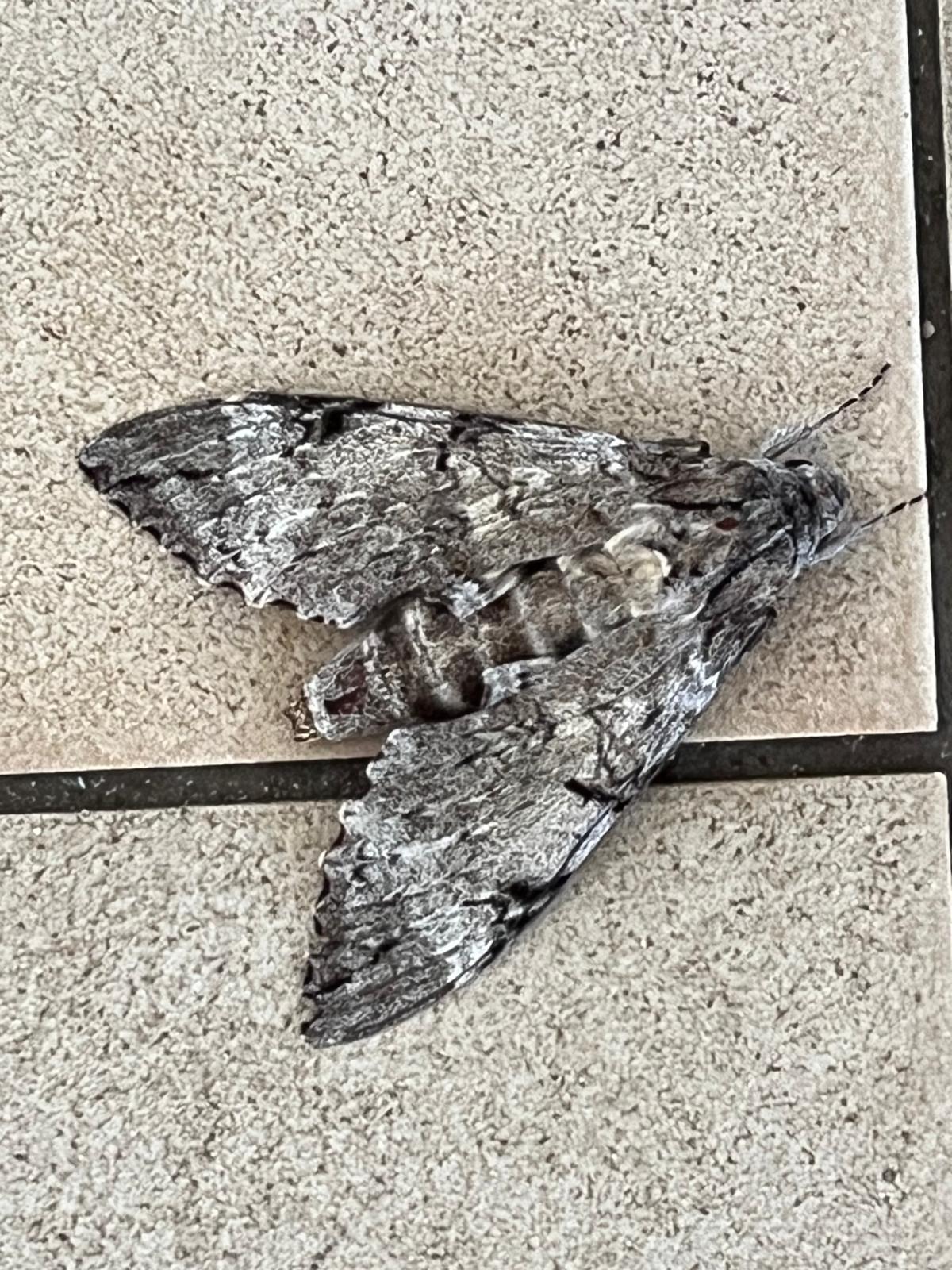
How’s this for a moth! The size and beauty of it.
Here’s a typical wood shingle church in the village of Black Rock, Tobago.
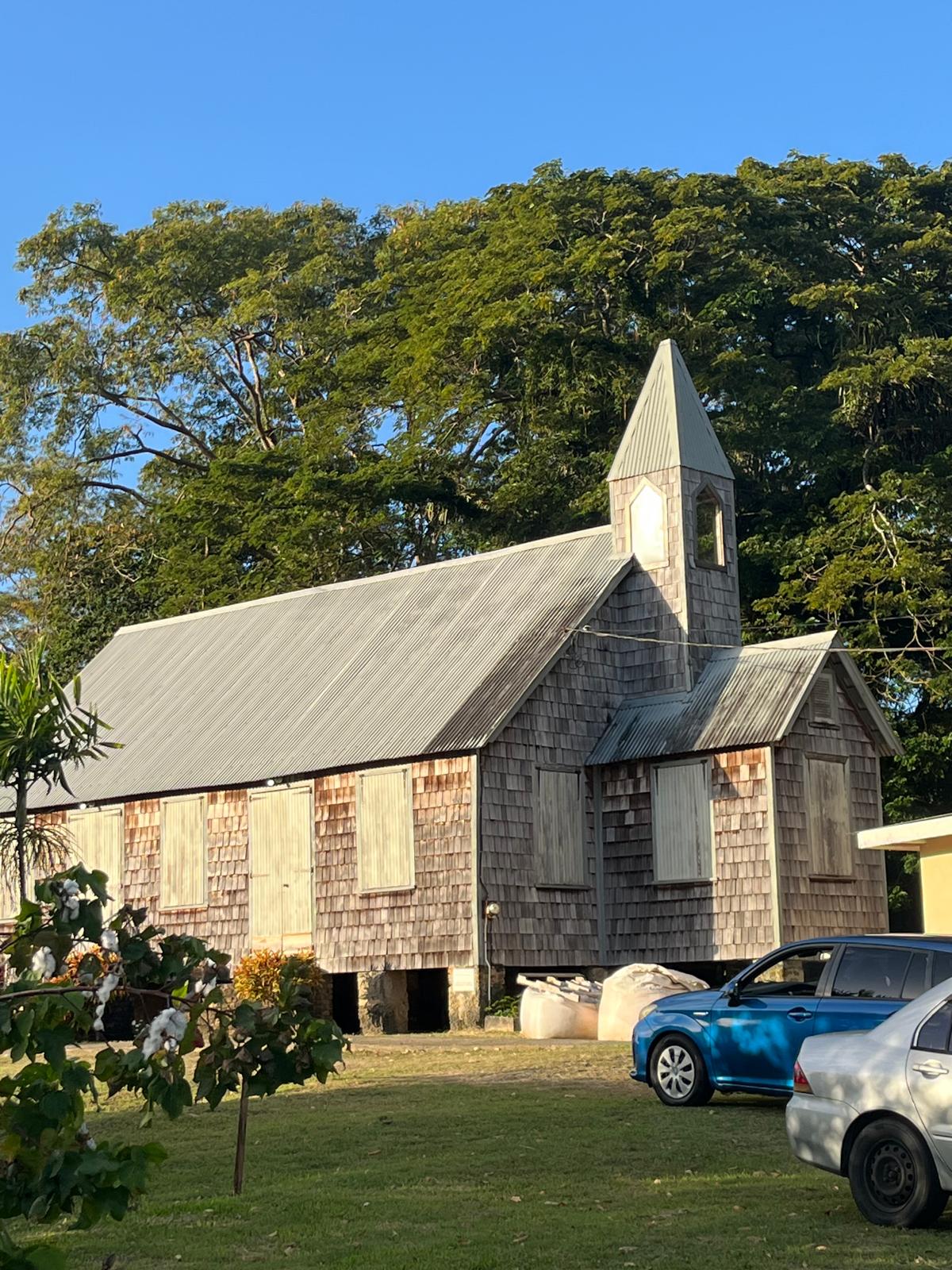
For decades it was derelict, invaded by vines that take everything over here. You feel if you stood still long enough, they’d take you over too!
This old church gave me the idea for an English couple, coming along and buying it and with the crazy idea of doing it up and making it their home...
And right opposite the church in Black Rock is another. The painting on its front wall you might recognise as the work of Luise Kimme, the German sculptress whose work we saw.
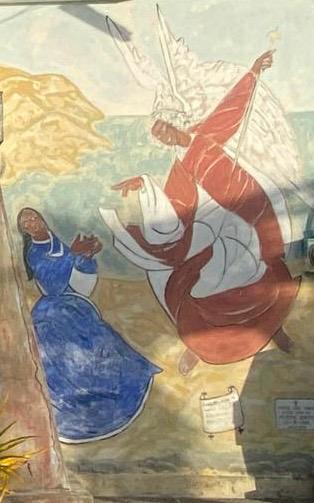
This fresco gave me the idea for the round window above the kitchen in the Pennington’s new home. It shows a Black angel Gabriel appearing to a shocked white Mary with the news she’s pregnant and going to bear God’s son. Mixed babies is kind of a recurring theme in the novel...
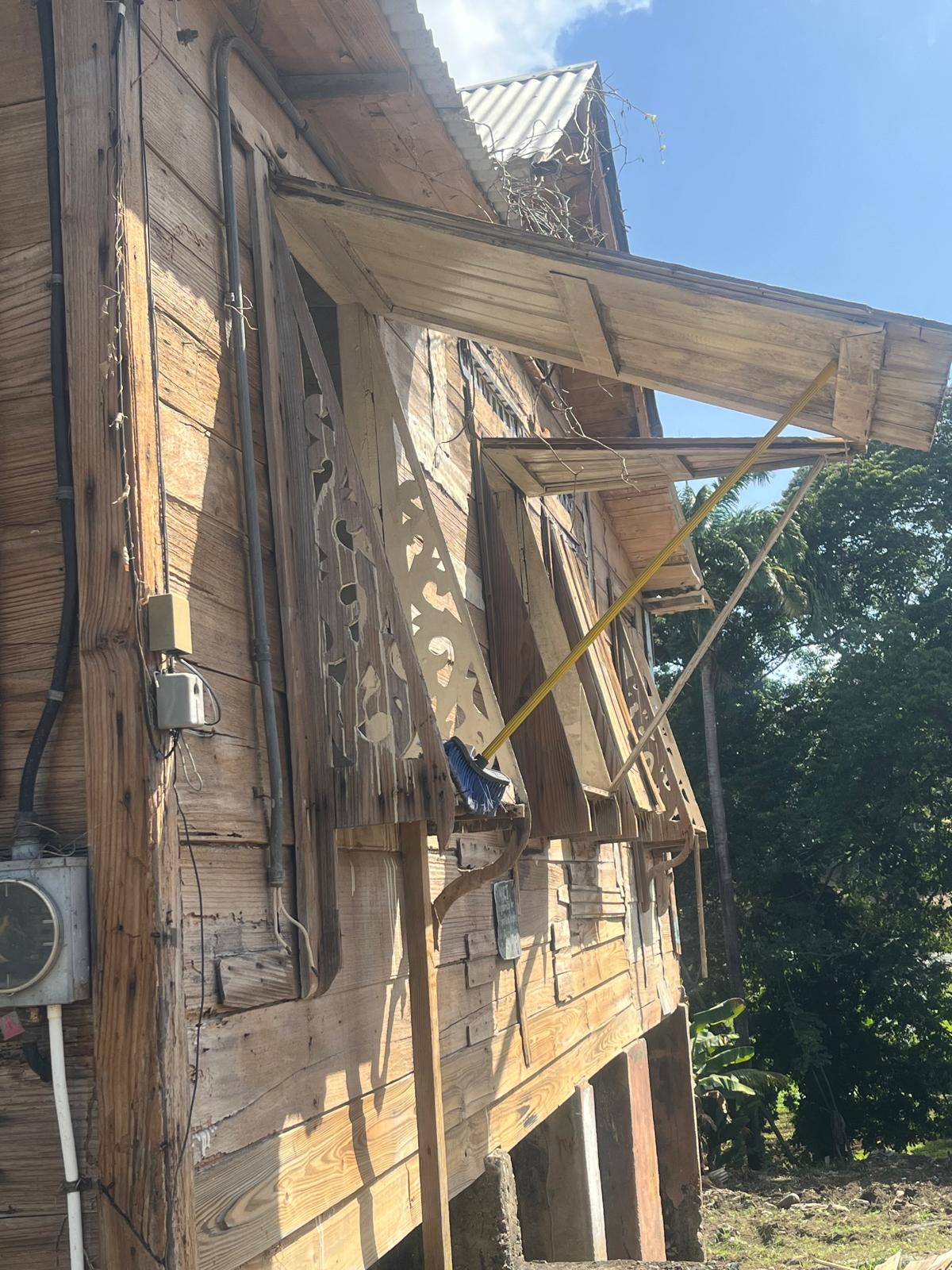
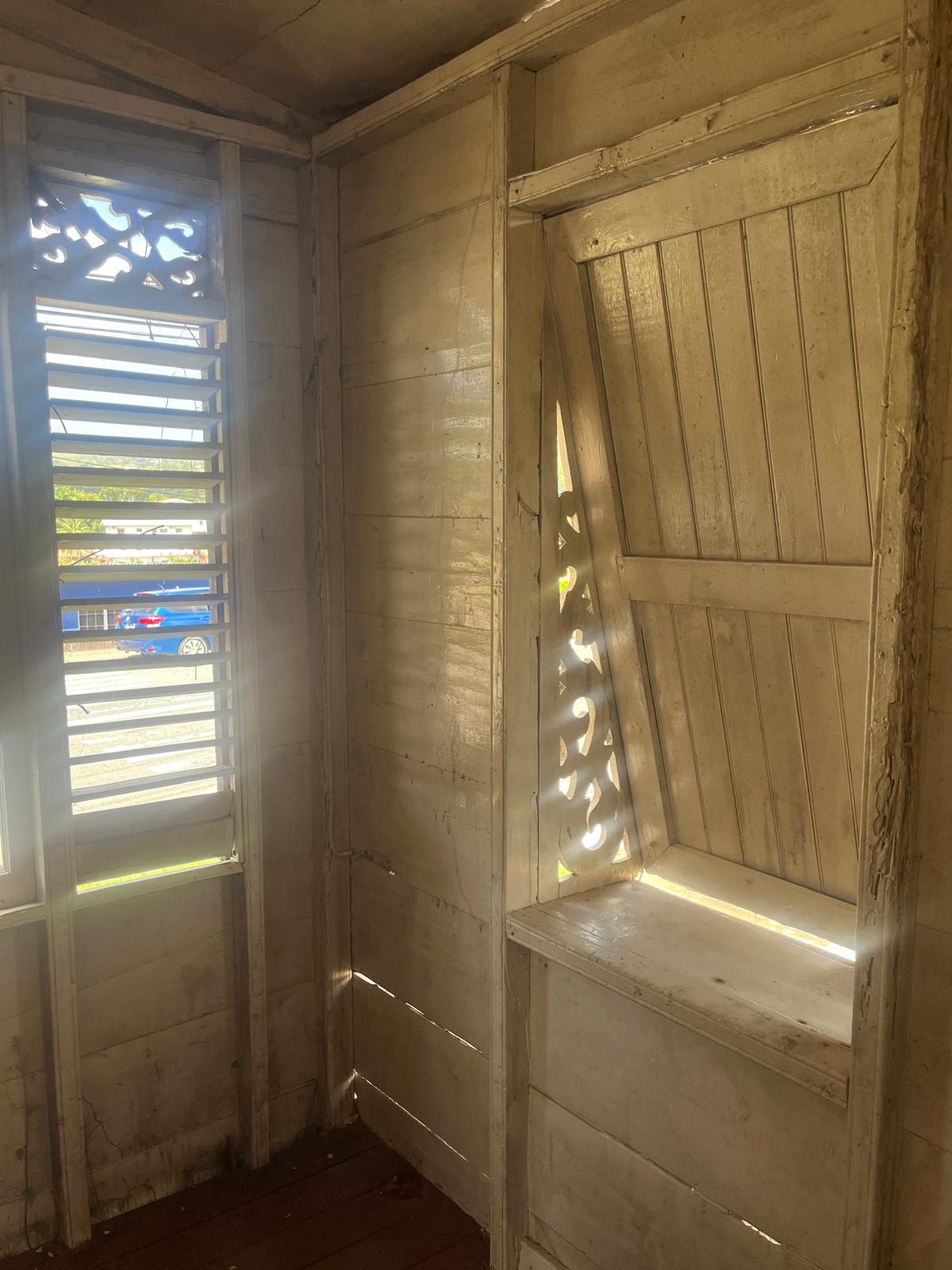
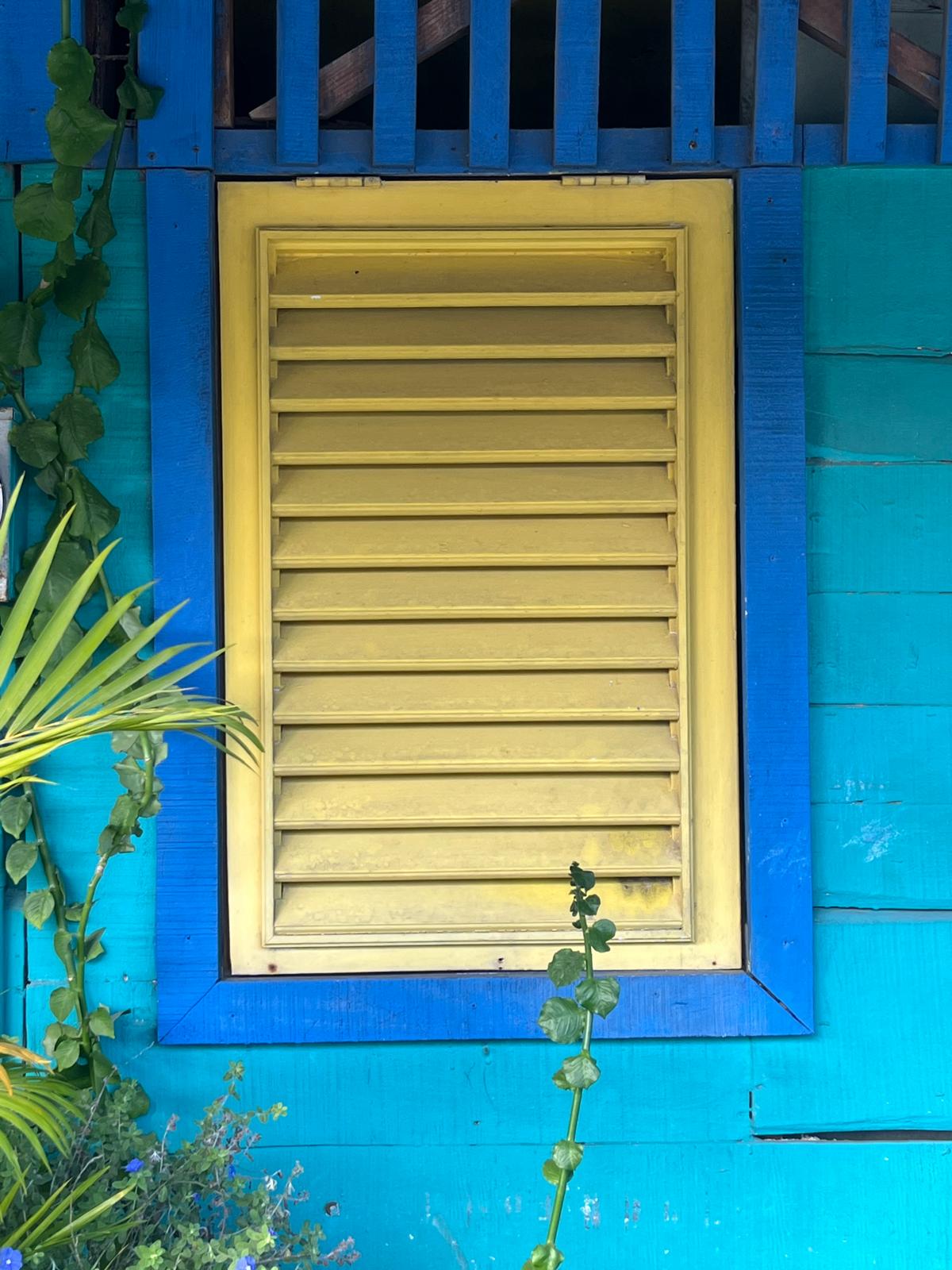
These are the jalousies I describe in The House in Bacolet (by the way, it’s pronounced ‘BackoleT’, with the T sounded at the end). The traditional shutters protruding on a stick are designed to catch the island breezes. The jalousies' angled louvres or slats are perfect for shading the house from the fierce tropical sun. Perfect for looking out without being seen. The term is taken from the French for ‘jealous’. To my character Julia, they suggest ‘covetous eyes looking out on indiscretions on hot plantation afternoons...’ Of course the heat, and a state of semi-undress, makes more than one of my characters fall prey to behaviours they might be capable of resisting at home...
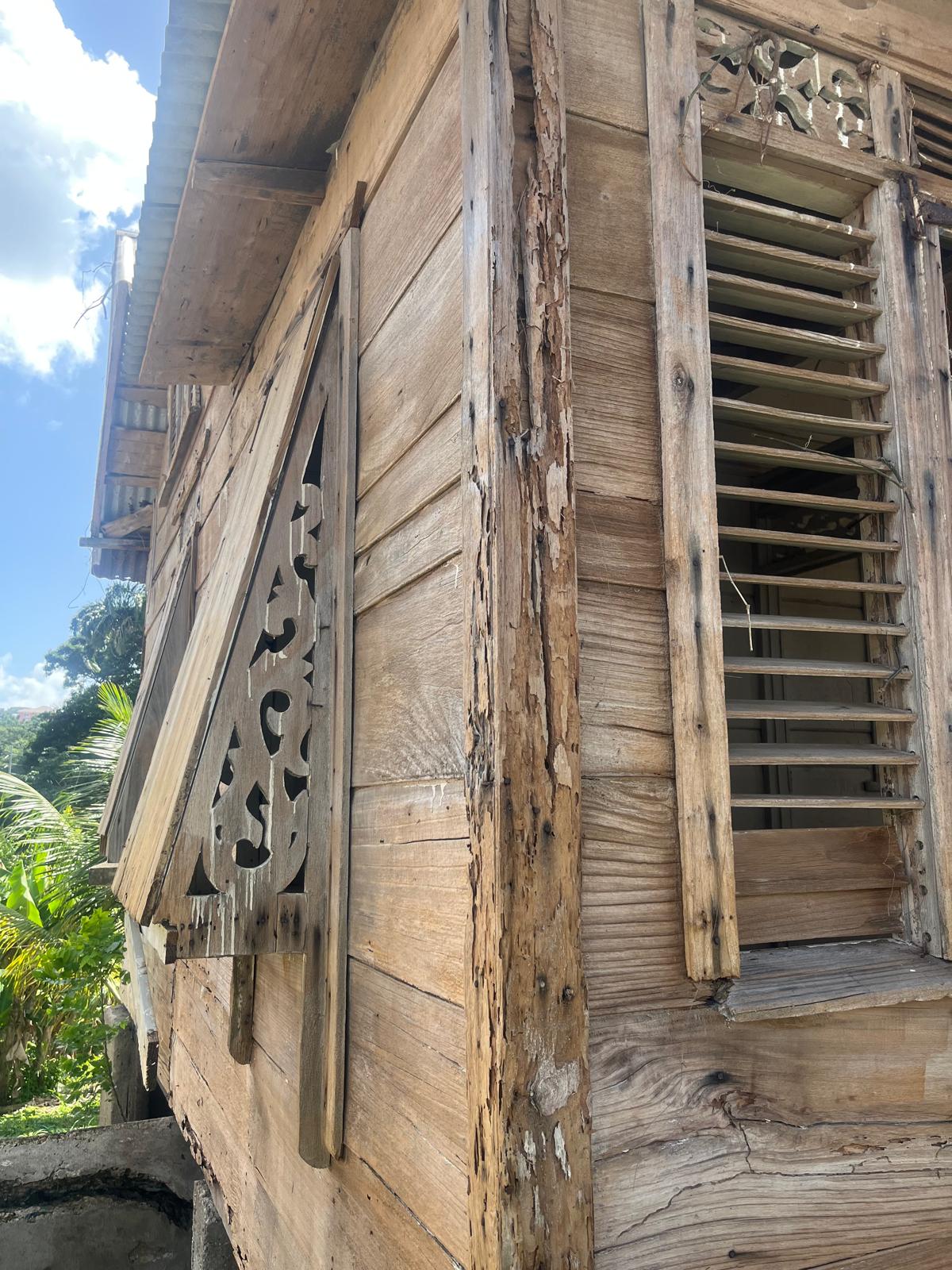
And this is the fretwork I describe in the Pennington’s old church St Mary’s. As Julia notes, ‘It meant you were never really alone, private, your intimate space never truly sealed off. Air circulated freely, as did insects and indiscretion.’
Not much chance of a room of one's own then!
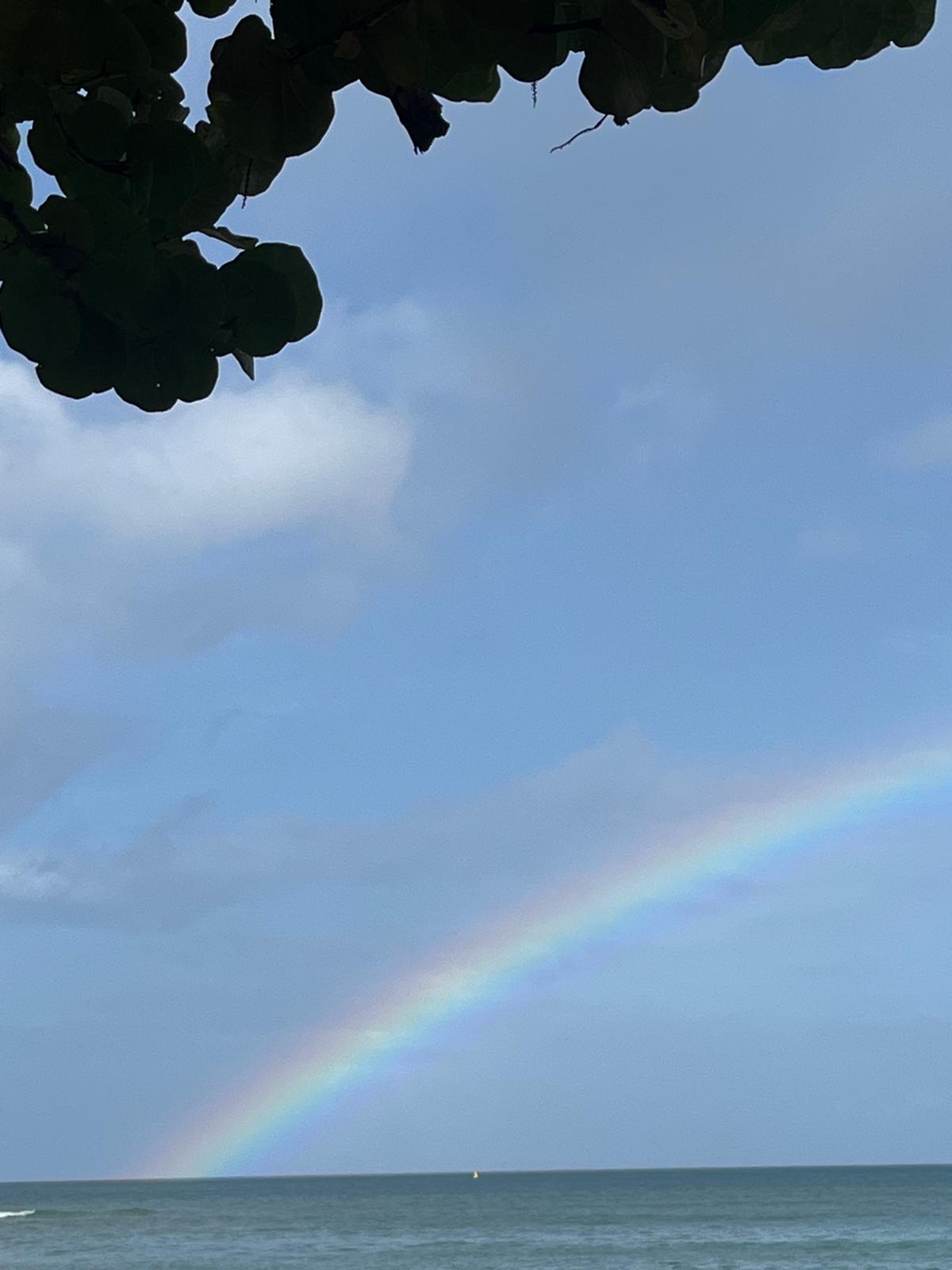
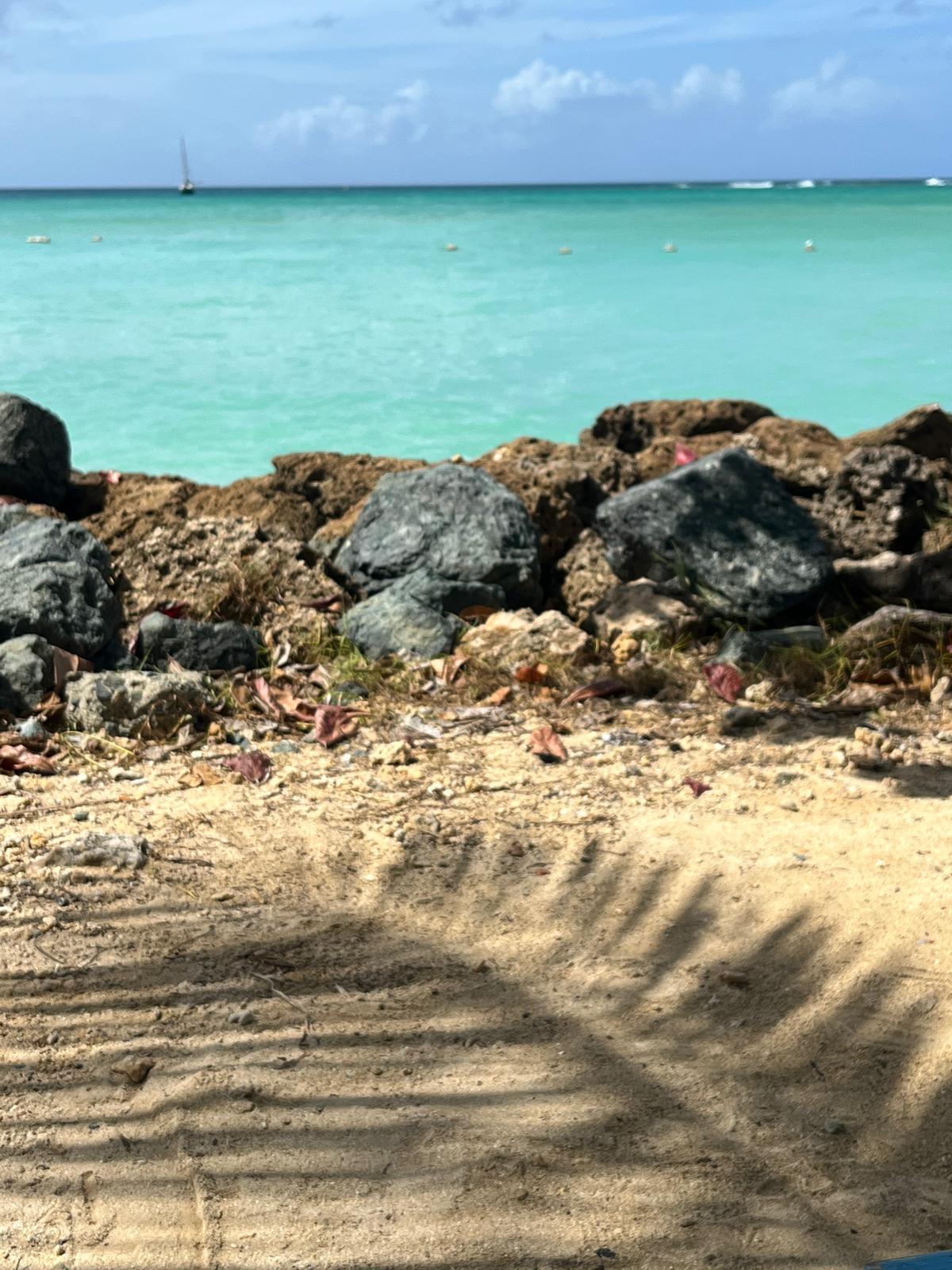
But a room with a view—certainly! These views framed by the window or the camera frame are superb.
Of course, the food is a huge pull back to the Caribbean. The Penningtons notice the billboard advertising the fiery pepper sauce. Spice up your life! In the course of the novel they certainly do that! They have their first roti in their new home to the guttering light of a hurricane lamp.
This Indian wrap was brought here after slavery ended, by indentured East India workers around 1845. Hugh learns to make callaloo with coconut water and flavour peppers.
...and of course there’s the rum punches Hugh serves, the layered red grenadine and lime competing with the sunset for outrageous colour!
Besides happy memories, and a tan top-up, food is what I brought back with me: a couple rotis, sugary-spiced up tambran balls, and a litre bottle of rum in my suitcase. As I was packing, the big jar of homemade pepper sauce my 88-year old cousin presented me with rolled off the bed. And smashed on the tiled floor... I haven’t had the heart to tell her.
Maybe time for a visit back.
About the author
Born in Trinidad and Tobago to a West Indian father and Irish mother, David Lambert grew up immersed in the rich diversity of the Caribbean, as well as experiencing life in Canada and the UK. He writes novels, plays, short stories and poetry inspired by travel. His debut novel, The House in Bacolet, is an intimate portrait of a marriage, the novel also explores the difficulties of human communication and how these are compounded when race, sex and culture-bound assumptions are added to the mix.
