


This is a guest blog by Peepal Tree Press intern Janelle Hawthorne
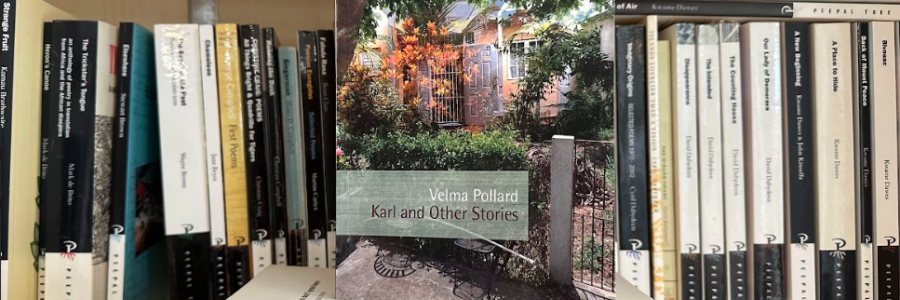
We are excited to announce the republication of Velma Pollard’s Karl and Other Stories as a Caribbean Modern classic in May this year, nearly thirty years after its initial release, with a new introduction by Daryl Cumber Dance. This blog will be a brief deep dive into the titular story 'Karl' and Velma Pollard’s prominent themes and messages throughout, as well as her legacy as a writer, poet, and scholar.
About ‘Karl’
Set in Canada and Jamaica in the 1960’s, 'Karl' is a tragicomedy of how Karl, a working-class Jamaican man gains access into the world of the middle class through his academic achievements, and though others celebrate him, he feels discontentment despite it. Karl was born into a poor family, his mother was a higgler and his grandfather a poor man, yet both of these figures were a source of pride for him. From an early age, he is nicknamed ‘the brightest little boy this side of Half-Way-Tree-Clock’, and his intelligence proceeds him in his adolescence, eventually winning a scholarship to study in Canada. The town’s belief in Karl becomes symbolic of hope for his town - ironically named Hopeville as ‘Vineyard college didn’t let anyone forget. First big-time winner from the school’.However, his move to Canada separates Karl from his home community and places him in an elitist world where he is an outsider. Karl experiences wealth and class conflicts that distort his experience, the first of which being with his first girlfriend, Pearl. Whilst Pearl and Karl are both from Jamaica, Pollard hones in on their difference experiences of the same country – the experience of middle-class privilege versus the impoverished. ‘What could I ever be to her indeed, stripped of my class prizes and scholarships[?]’ Karl realises the superficiality of his academic career – it is futile and does not change his identity. No matter what - his past, his background will always proceed him. ‘We were from two different Jamaica’s’, he recognises, Karl the poor side and Pearl the wealthy, a bridge even academia can’t seemingly connect. Thus, Karl is aware of his being an outsider in the middle-class realm, he recognises, ‘Academic success had given me a certain freedom which I eventually recognised is only temporary’, as to show his knowing of the superficiality of the status his academic achievements award him. Karl longs to return home, a longing that follows him through his adulthood as a banker. ‘I don’t want to go back to the bank. I don’t want to go back to my life,’ he states, and instead believes that a return to Hopeville is his only true salvation, ‘if I leave here, the only place I will go is Hopeville’ – Karl’s longing is however dismissed by his peers and friends, for how could you feel discontent with such accolades? With such status? Velma Pollard conveys that there is more to life than wealth and academic achievement, happiness lies in community and family – a connection to the land of which you are born upon. Pollard presents a character whom, in all his glory, will never truly be accepted into the elitist, colonial world that he tries to, for race and class inhibit true assimilation into this realm. Perhaps Pollard was suggesting how these barriers will always proceed a person, for, as stated by Daryl Cumber Dance in the introduction, ‘[Karl] can never fit comfortably in colonial society’. Karl remains a timeless classic that adds to the legacy of Velma Pollard leaves behind as well as the Jamaican literary canon.
The rest of the collection features short stories from the perspective of Jamaican women from varying socio-economic backgrounds. The stories explore themes of love, poverty and grief.
About Velma Pollard
Velma Pollard was born in 1937 and was an esteemed poet, writer, and scholar of language. She was educated in Kingston, Jamaica and has since received an MA from McGill University in education, and Colombia University in teaching English. Her novella Karl won the Casa de las Americas prize in 1992, and she has published regional journals since 1975 and monograph Dread Talk: The Language of the Rastafari in 1994. Peepal Tree Press has published four collections of her poetry: Shame Trees Don't Grow Here, Leaving Traces, Crown Point and And Caret Bay Again—as well as Considering Woman I & II. Velma resided at her home in Kingston, Jamaica at the time of her passing and leaves behind a rich literary legacy. She is sorely missed by her friends, family and readers. You can explore more of her work here.
